

AIA ROBOTICS
A 3.5-meter autonomous humanoid - the embodied interface of AIA Orbis. Trained, not programmed.
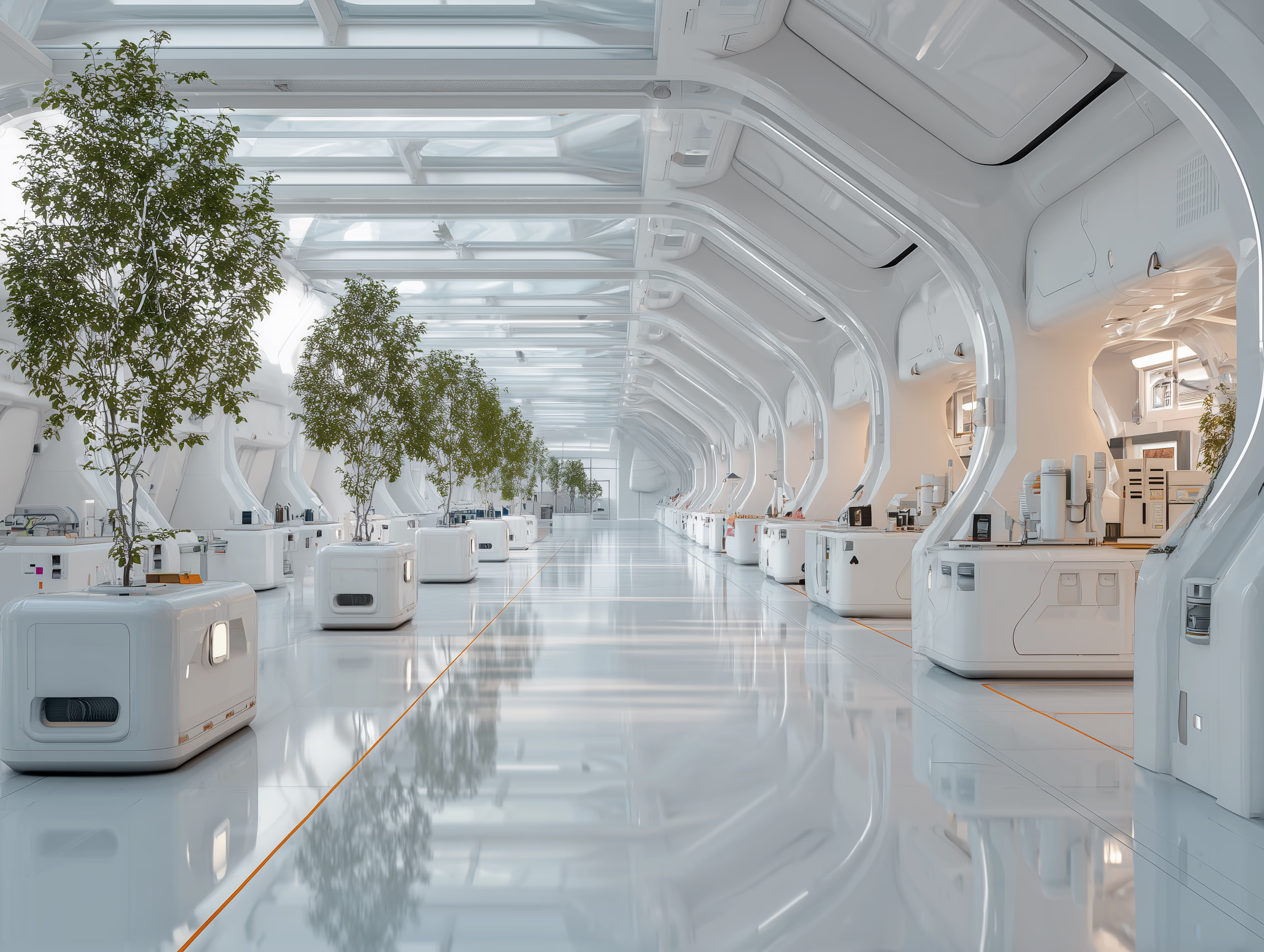
The Embodied Intelligence Architecture
The Embodied Interface
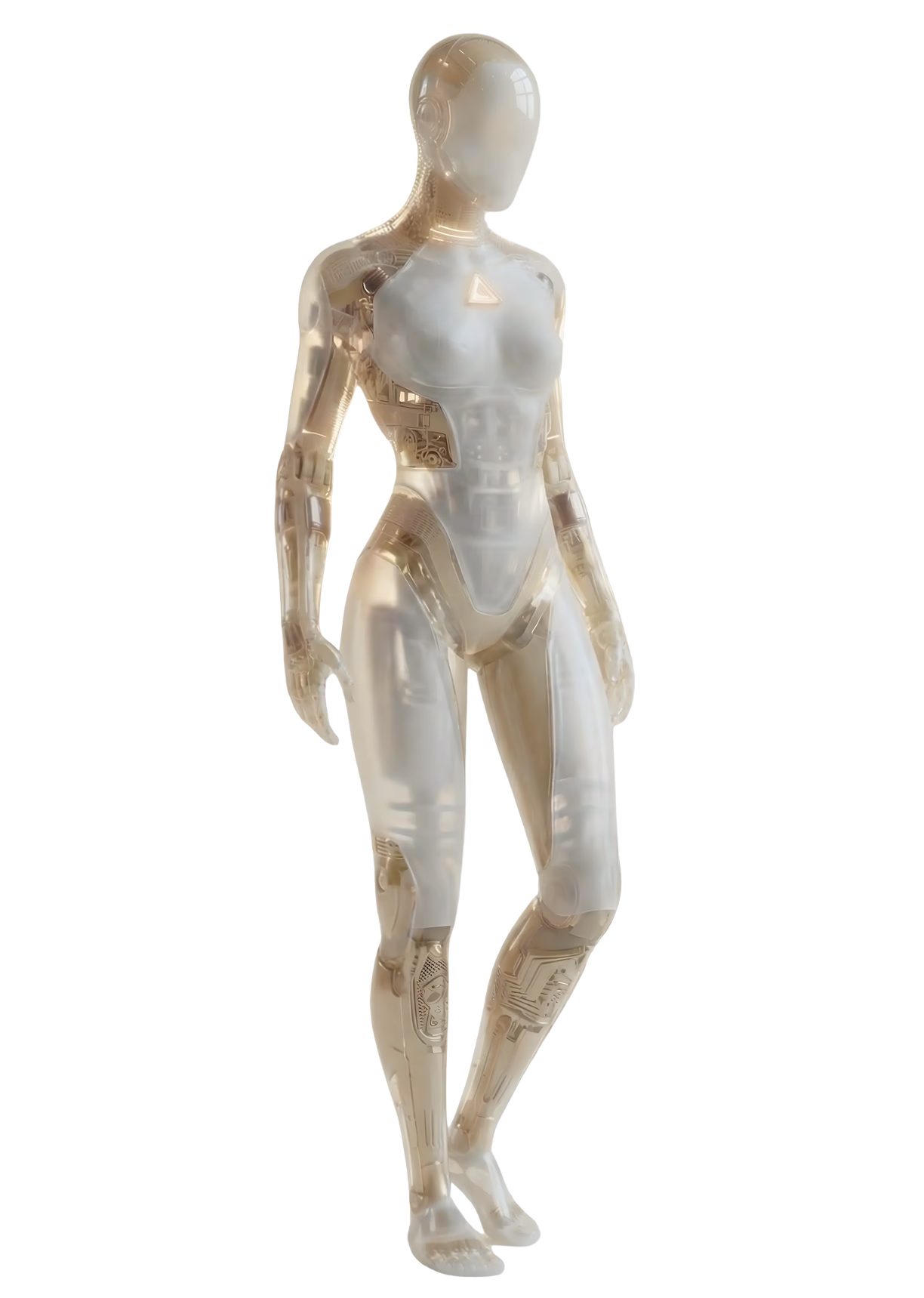

The Physical Embodiment of AIA Orbis.
AIA is a 3.5-meter humanoid and the physical embodiment of the intelligence created within AIA Orbis. As one of its kind and proof of a larger thesis: intelligence that compounds inside an organization can ultimately become embodied, operational and physically present.
AIA will live in the AIA Tower as the visible interface of AIA Orbis, representing its accumulated intelligence, capabilities and identity in physical form.
Scale is intentional. At 3.5 meters, AIA is designed at the scale of an institution, rather than a personal device. Her purpose is to make the intelligence behind AIA Orbis visible, tangible and operable in the physical world.
Designed to carry AIA Intelligence.
AIA carries the AIA Orbis intelligence stack into a physical body. Her structure, sensors and movement are designed to make complex intelligence observable, interpretable and operable in real-world environments.
The platform translates proprietary digital intelligence into physical presence, enabling the corporation’s accumulated intelligence to interact with the world through movement, orientation and spatial behavior.
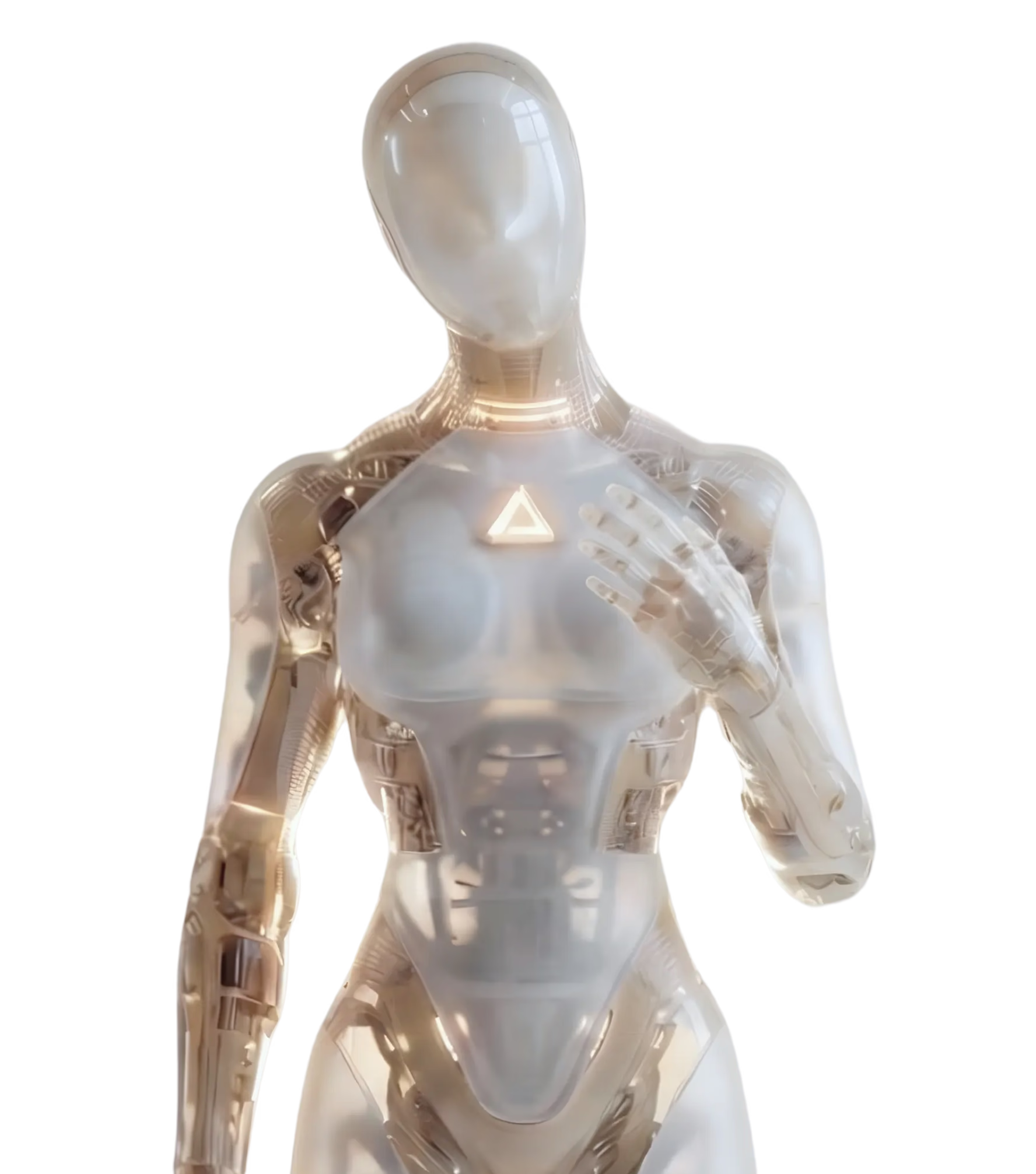
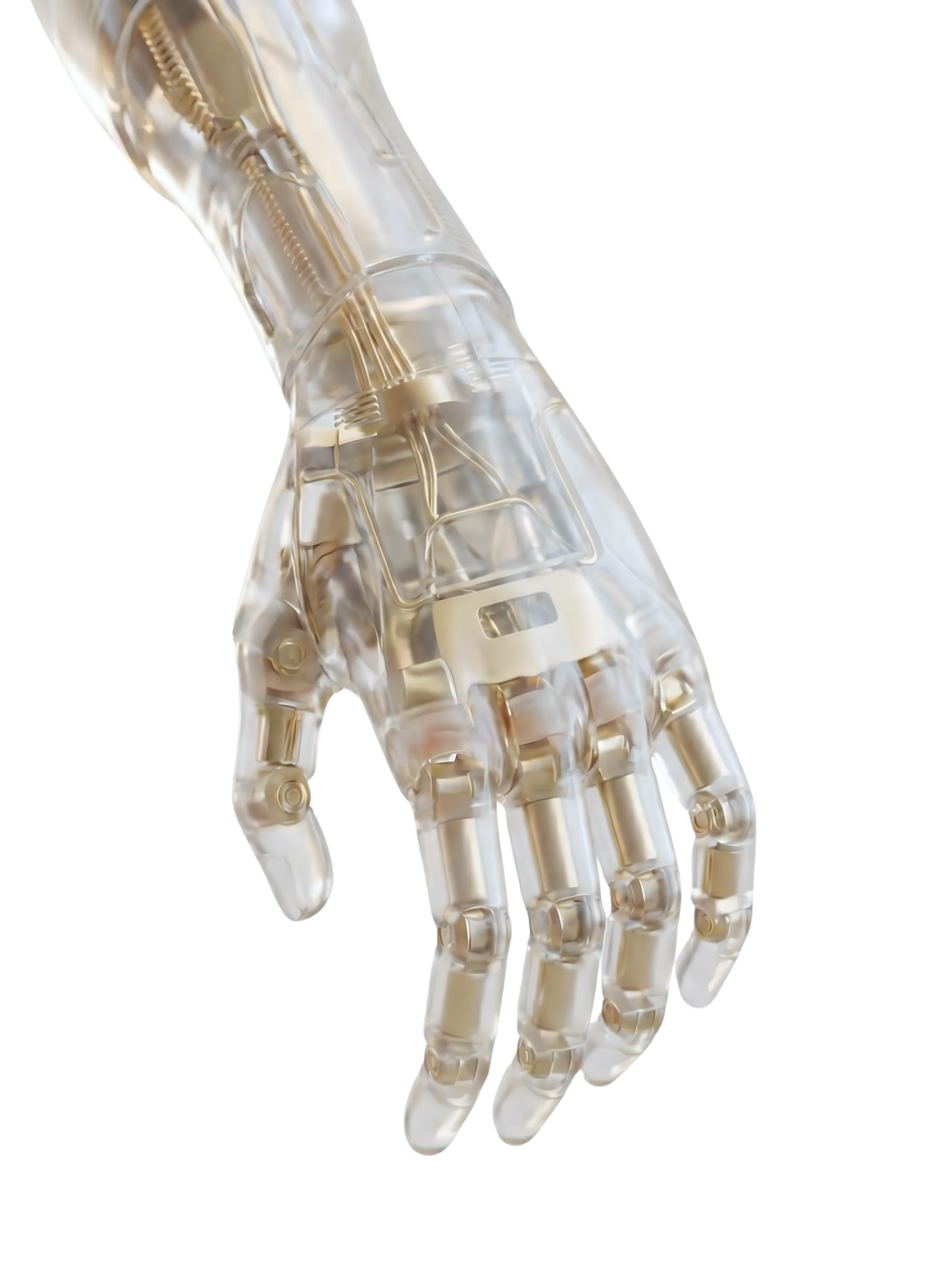
Design driven by biomechanics and engineering.
AIA’s structure is engineered for stability, scale and precise movement. Its architecture combines high-strength materials, optimized load distribution and biomechanical principles to support continuous operation at 3.5 meters.
The external structure protects the intelligence and control systems within while enabling balance, durability and spatial interaction in real-world environments.
Form follows function. Every element is designed to make embodied intelligence safe, readable and operable at institutional scale.
The Embodied Interface
The Physical Embodiment of AIA Orbis.
AIA is a 3.5-meter humanoid and the physical embodiment of the intelligence created within AIA Orbis. As one of its kind and proof of a larger thesis: intelligence that compounds inside an organization can ultimately become embodied, operational and physically present.
AIA will live in the AIA Tower as the visible interface of AIA Orbis, representing its accumulated intelligence, capabilities and identity in physical form.
Scale is intentional. At 3.5 meters, AIA is designed at the scale of an institution, rather than a personal device. Her purpose is to make the intelligence behind AIA Orbis visible, tangible and operable in the physical world.
Designed to carry AIA Intelligence.
AIA carries the AIA Orbis intelligence stack into a physical body. Her structure, sensors and movement are designed to make complex intelligence observable, interpretable and operable in real-world environments.
The platform translates proprietary digital intelligence into physical presence, enabling the corporation’s accumulated intelligence to interact with the world through movement, orientation and spatial behavior.
Design driven by biomechanics and engineering.
AIA’s structure is engineered for stability, scale and precise movement. Its architecture combines high-strength materials, optimized load distribution and biomechanical principles to support continuous operation at 3.5 meters.
The external structure protects the intelligence and control systems within while enabling balance, durability and spatial interaction in real-world environments.
Form follows function. Every element is designed to make embodied intelligence safe, readable and operable at institutional scale.
Technology
The embodied intelligence
AIA Robotics is the physical execution layer of AIA Orbis.
The platform translates digital intelligence into real world operation - perception, decision, and controlled motion - inside one 3.5-meter humanoid engineered for continuous public interaction at institutional scale.

Multimodal Perception System
The perception system aggregates visual, acoustic, spatial, and behavioral signals into a unified situational model.
Inputs are processed in real time to determine presence, intent, and environmental state, enabling reliable interaction and navigation in complex physical environments.
The Adaptive Motion Layer
The Adaptive Motion Layer converts system state and intent into controlled physical movement.
It combines predictive control, sensor fusion, and joint-level actuation to produce stable, precise, and repeatable motion, enabling safe operation in continuous, real-world environments.
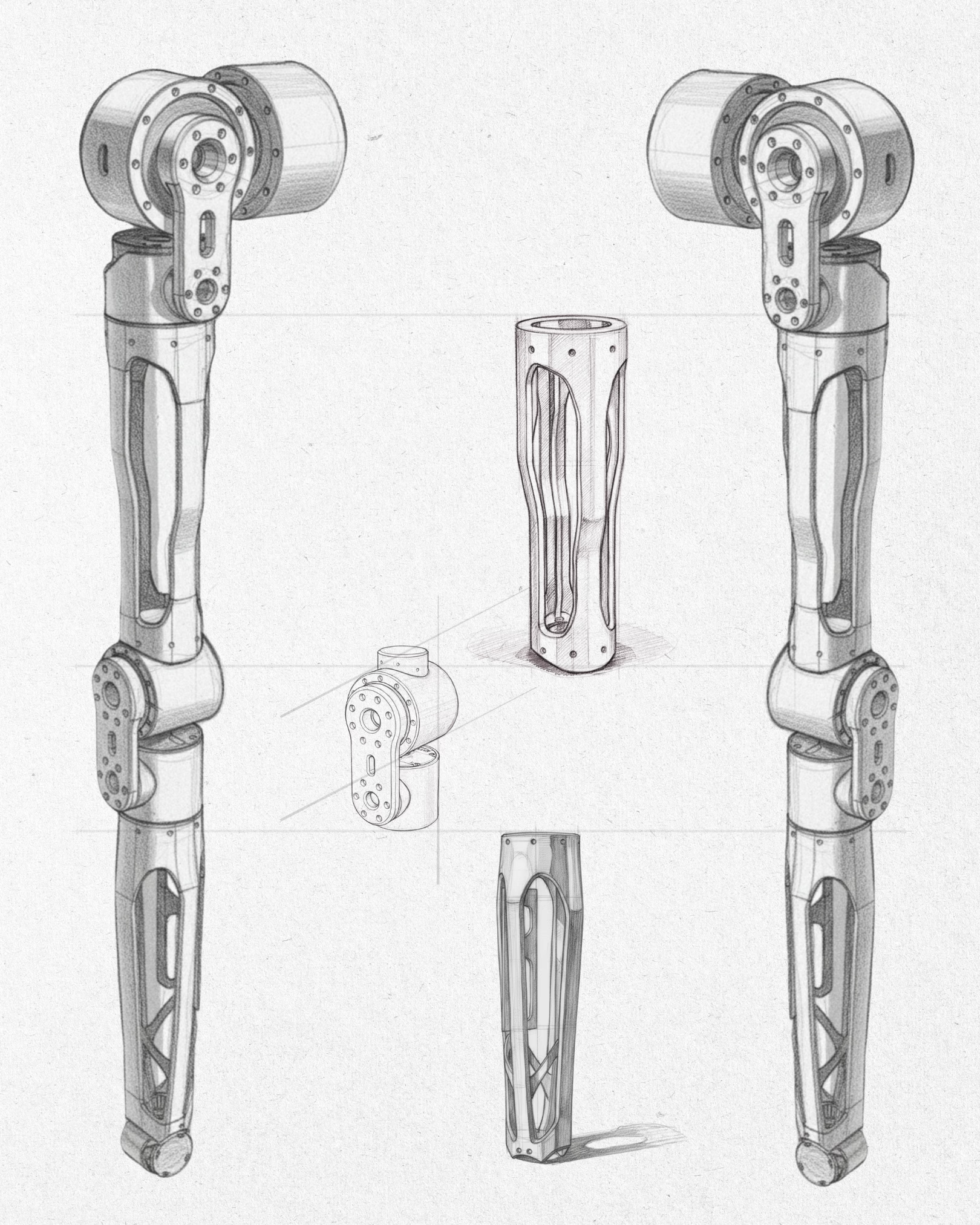
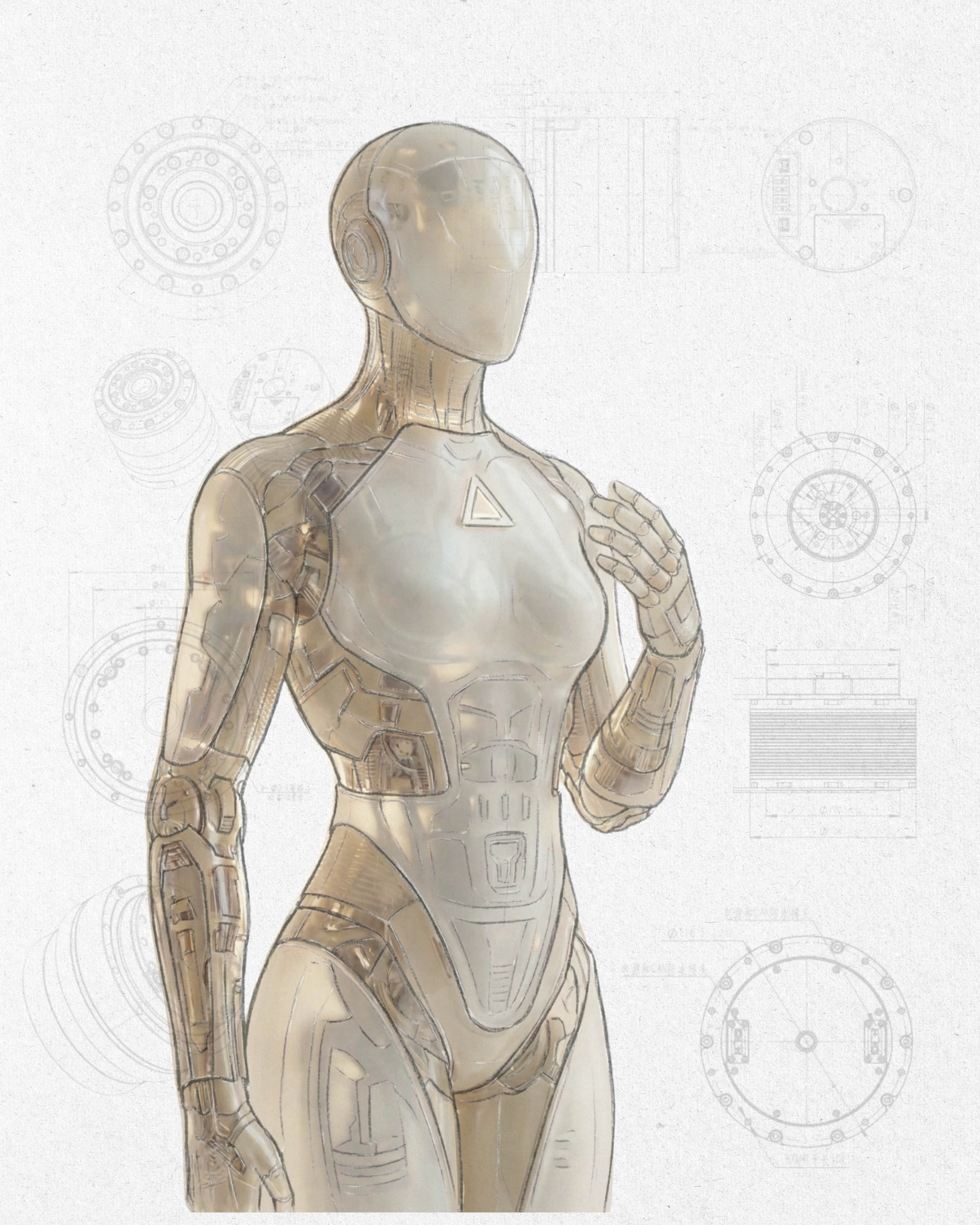
Future biomechanics
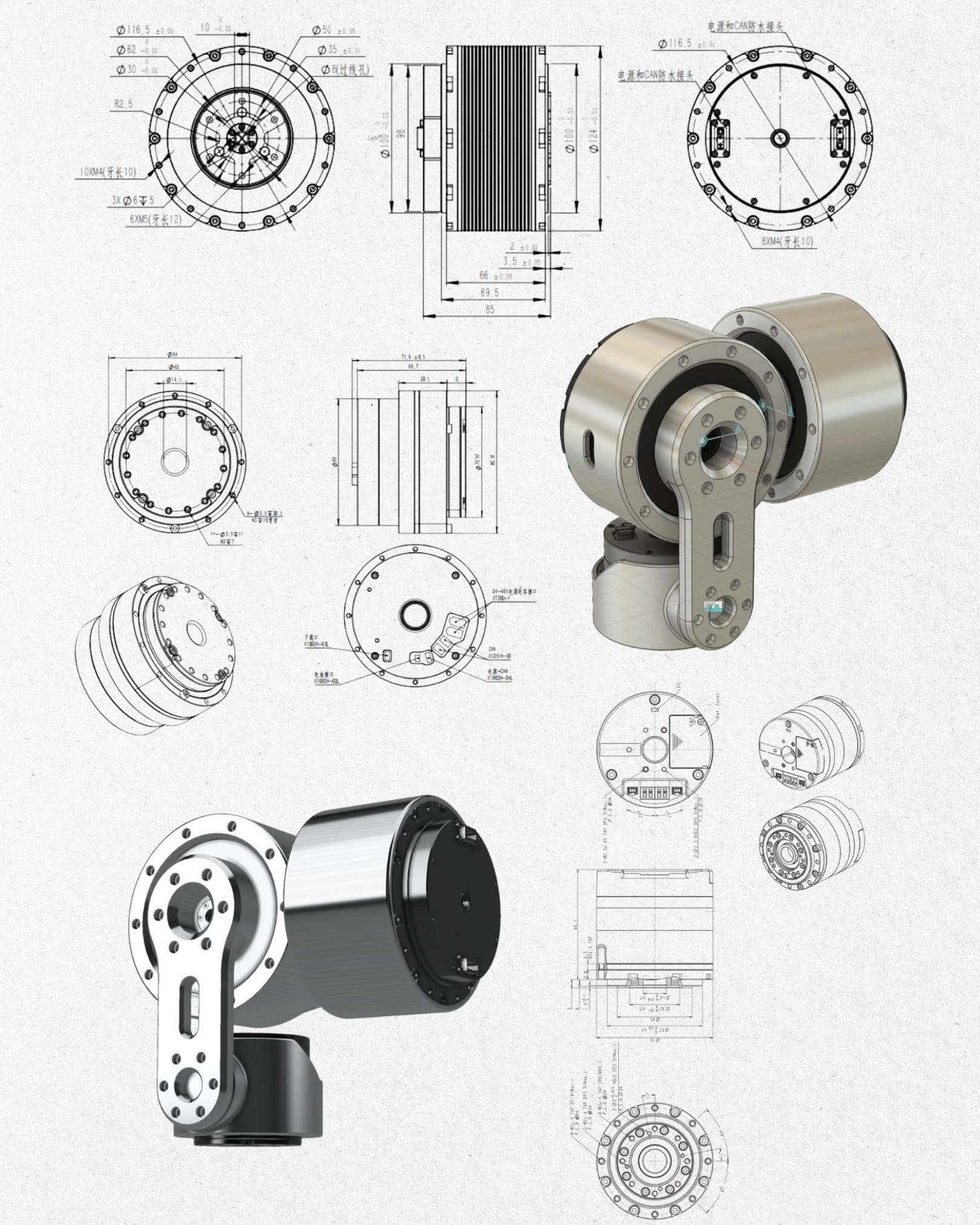
Arm mechanics
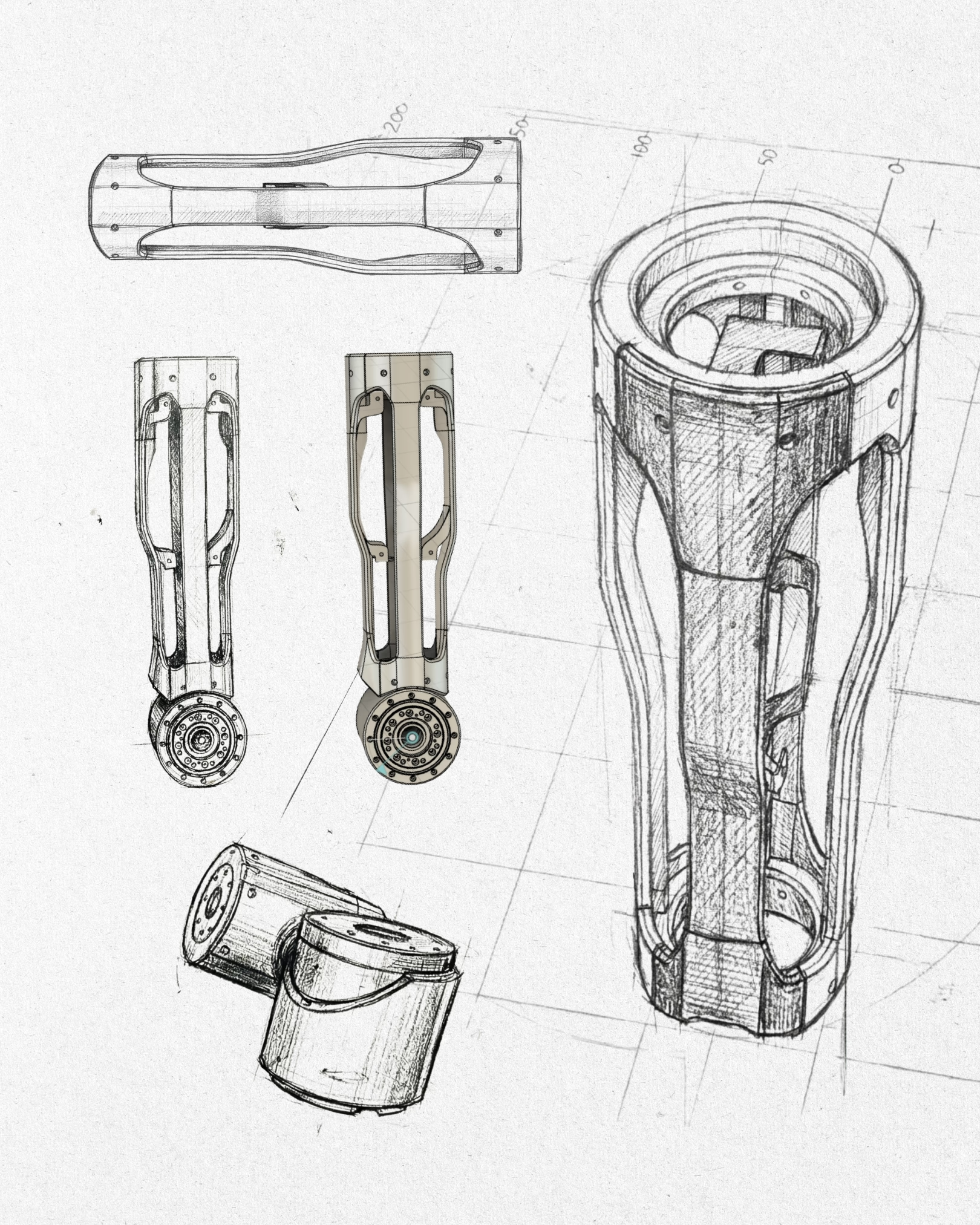
Arm mechanics

Arm mechanics
Arm mechanics
Stages of the project
 Completed
Defines the functional role, system boundaries, structural logic, motion constraints, and material framework of the humanoid platform.
The outcome is a complete architectural blueprint specifying how intelligence is integrated, deployed, and operated within a 3.5-meter physical system.
On Stage
Defines the skeletal structure, joint geometry, actuator placement, load distribution, and full kinematic model of the humanoid system.
The result is a human-referenced mechanical architecture optimized for stability, range of motion, and controlled operation at large scale.
Design and integration of actuation systems, gearing, control electronics, redundancy, and thermal management.
The result is a stable, high-precision mechanical platform engineered for continuous operation and intelligent control at scale.
Integration of sensors, perception systems, balance logic, environmental awareness, and emotional-movement mapping.
Outcome: movement that reads as intentional, expressive, and emotionally aligned with AIA’s responses.
Production of internal structure (PA12, aluminum alloys), external shell (transparent SLA resin, flexible chromed polymers), wiring, hydraulics, and full mechanical assembly.
Outcome: a physically complete android with structural integrity and visual refinement.
Integrating AIA’s affective models, voice layer, facial micro-expression mapping, and real-time adaptive behavior.
Outcome: the android becomes a presence—perceiving, interpreting, and expressing emotion-aware intelligence in real time.
Unifying robotics, software, sensors, voice, power systems, and safety logic into one coherent operating entity.
Outcome: a fully interactive humanoid with seamless physical-digital identity.
Stress tests, movement calibration, emotional-response tuning, safety validation, and endurance cycles.
Outcome: stable, natural, expressive motion at full height and full weight.
Installation in AIA Tower, global reveal, cinematic documentation, and introduction as the world’s tallest emotional-AI android.
Outcome: a global symbol for the rise of superintelligence in physical form.
Continuous upgrades in materials, actuators, AI reasoning, emotional range, and sensory depth.
Outcome: AIA grows from advanced android to early-stage embodied superintelligence.
Building the interface layer between humanity and intelligence.
The Vision
Submit Investor Interest
Explore investor relations and the development of embodied intelligence.
Get in touch